
If you’ve ever looked at an HVAC unit nameplate and felt confused by all the abbreviations, you’re not alone. At Sub Zero Temp Control, homeowners ask us all the time what minimum circuit ampacity (MCA) and MOCP mean—and how those numbers affect wire size, breaker choice, and system safety.
Before you start worrying about breaker size or wire gauge, you need to know the role of each number. MCA and MOCP do different jobs, and mixing them up is where most mistakes happen.
What “Minimum Circuit Ampacity” Actually Means
Minimum circuit ampacity (MCA) is the minimum amount of electrical current the circuit must be able to safely handle for that HVAC equipment.
In other words:
MCA helps determine the minimum wire size
It’s focused on conductor safety
It prevents overheating under normal operating conditions
However, MCA isn’t the number you use to size the circuit breaker. That’s where MOCP comes in (we’ll get there in a second).
Think of MCA like this:
“My wiring must be sized to at least this number.”
Minimum Circuit Ampacity vs MOCP: The Simple Difference
Here’s the cleanest way to remember it:
MCA = wire size
MOCP = breaker/fuse limit
Minimum circuit ampacity protects the wire from overheating, while MOCP (Maximum Overcurrent Protection) tells you the largest breaker or fuse you’re allowed to use for that system.
So yes—MOCP is basically the “do not exceed” number for circuit protection.
And this is where people get tripped up:
Your HVAC unit may have an MCA of 28A and an MOCP of 45A. That doesn’t mean the unit “uses 45 amps.” It means MOCP accounts for startup surges that happen when the compressor kicks on.
Why the Breaker Doesn’t Always Match Minimum Circuit Ampacity
This is the part that makes people squint at the panel.
In normal electrical logic, people assume:
“MCA is 28 amps, so I need a 30 amp breaker.”
Sometimes that works. Sometimes it doesn’t, because HVAC systems (especially compressors) don’t behave like simple resistive loads. They have startup surges and motor characteristics that can briefly spike current.
So manufacturers often allow a higher breaker size up to the unit’s MOCP rating to avoid nuisance trips during startup.
Still, the wiring must match the MCA at minimum. Always.
Where to Find Minimum Circuit Ampacity and Max Breaker (MOCP) on Your Unit
You’ll usually find this information on the unit’s nameplate label, typically near:
Model/serial
Voltage
Phase
MCA
MOCP
Sometimes LRA/RLA
On many unit nameplates, minimum circuit ampacity (MCA) is listed as “Minimum Circuit Amps.”
Quick tip: snap a photo of the nameplate before calling—those numbers speed up troubleshooting.
What Happens If Minimum Circuit Ampacity Is Sized Wrong?
When the wiring or breaker doesn’t align with minimum circuit ampacity and MOCP guidelines, it creates real problems.
You might see:
Breaker trips on hot days
Dim lights during startup
Warm/burnt electrical smell
Outdoor unit failing to start
Intermittent shutdowns
Compressor damage over time
And if we’re being real… this usually shows up during the first heat wave or cold snap. (Because of course it does.)
Minimum Circuit Ampacity Safety Note: Don’t Guess on Electrical Sizing
Since minimum circuit ampacity is really about conductor safety, NFPA explains that ampacity is based on how much current a conductor can carry continuously without exceeding insulation temperature limits.
If you’re not 100% comfortable with electrical work, don’t “trial-and-error” breaker sizing.
That’s not a DIY learning moment. That’s a fire hazard.
Instead, start with safe steps:
Confirm the unit nameplate values
Confirm the actual breaker size installed
Confirm wire gauge used
Confirm disconnect condition
Then call a licensed HVAC/electrical pro if anything doesn’t match
If anything looks mismatched, don’t guess—get it checked. Electrical sizing mistakes don’t just cause nuisance trips; they can create real safety risks.
Common HVAC Problems That Look Like Electrical Issues
A lot of HVAC problems look electrical at first, even when the wiring and breaker are fine.
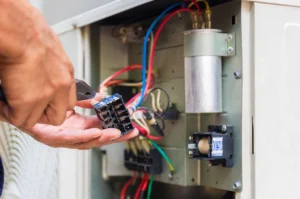
For example, capacitor problems can look like an electrical supply issue because the unit has power but can’t start properly. You may notice hard starts, humming, or a fan that struggles to spin—so it helps to know the warning signs of a failing run capacitor.
In systems that use PSC motors (that’s the “permanent split capacitor” style motor), motor or capacitor problems can mimic electrical issues and show up as weak airflow or hard starts.
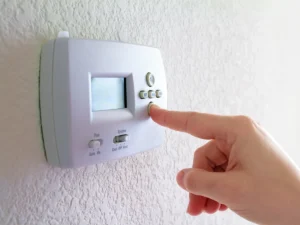
And if the system is completely dead, it can look like a major electrical failure. However, a thermostat that isn’t getting power is often the real issue (and it’s more common than people think).
Maintenance Tip: Electrical Problems Get Worse When Airflow Is Bad
This surprises a lot of people, but electrical stress isn’t always “just electrical.”
When airflow is restricted, systems run hotter and longer. Over time, that extra runtime puts more stress on motors and electrical components.
That’s why airflow maintenance matters more than most homeowners realize. In fact, ENERGY STAR’s heating and cooling maintenance checklist highlights simple steps like replacing filters and keeping equipment clean so your system can operate efficiently through peak season.
And yes… it’s the boring stuff that prevents expensive calls. It’s worth it.
When MCA & MOCP Mistakes Show Up During Service Calls
At Sub Zero Temp Control, we often see MCA/MOCP problems after:
New system installs by inexperienced crews
Panel upgrades done without matching HVAC requirements
DIY disconnect replacements
Remodels where circuits got moved
“It worked before” breaker swaps
And here’s the key point: sometimes the equipment itself is perfectly fine. It’s just not getting the correct power supply.
That’s why we always verify nameplate specs before condemning a compressor or control board.
Final Notes And When to Call a Pro
If you remember one thing from this blog, remember this:
Minimum circuit ampacity protects your wiring. MOCP limits breaker size.
If your breaker keeps tripping, wiring looks wrong, or your system is acting erratic, it’s worth having it checked properly. The fix is often simpler than people think, but it has to be done safely—which is exactly when professional heating repair makes sense.
And if you’re in the Vancouver, WA area, Sub Zero Temp Control can help. Whether you need troubleshooting, repairs, or just want someone to confirm the electrical setup is safe, contact us and we’ll get you taken care of. We work throughout Vancouver and the surrounding communities, and we’re happy to help you make sense of minimum circuit ampacity and the rest of the nameplate details.
FAQs Quick Answers
Here are a few fast answers we hear most often.
It means the circuit wiring must safely handle at least that many amps for the HVAC unit.
No. MCA is used for wire sizing, while breaker size must stay at or below MOCP.
It can fail to protect the wiring properly and increase fire risk.
Often yes, as long as it doesn’t cause nuisance trips and meets code/manufacturer specs.What does minimum circuit ampacity mean?
Is MCA the same as breaker size?
What happens if the breaker is too large?
Can I install a smaller breaker than MOCP?