
Whole-Home Air Filtration: What Your System Can Actually Handle in Vancouver, WA
Thinking about whole-home air filtration? Before you buy a higher-rated filter or an air cleaner, here is what the options are, why the highest MERV rating is not always the best choice, and what we measure first.
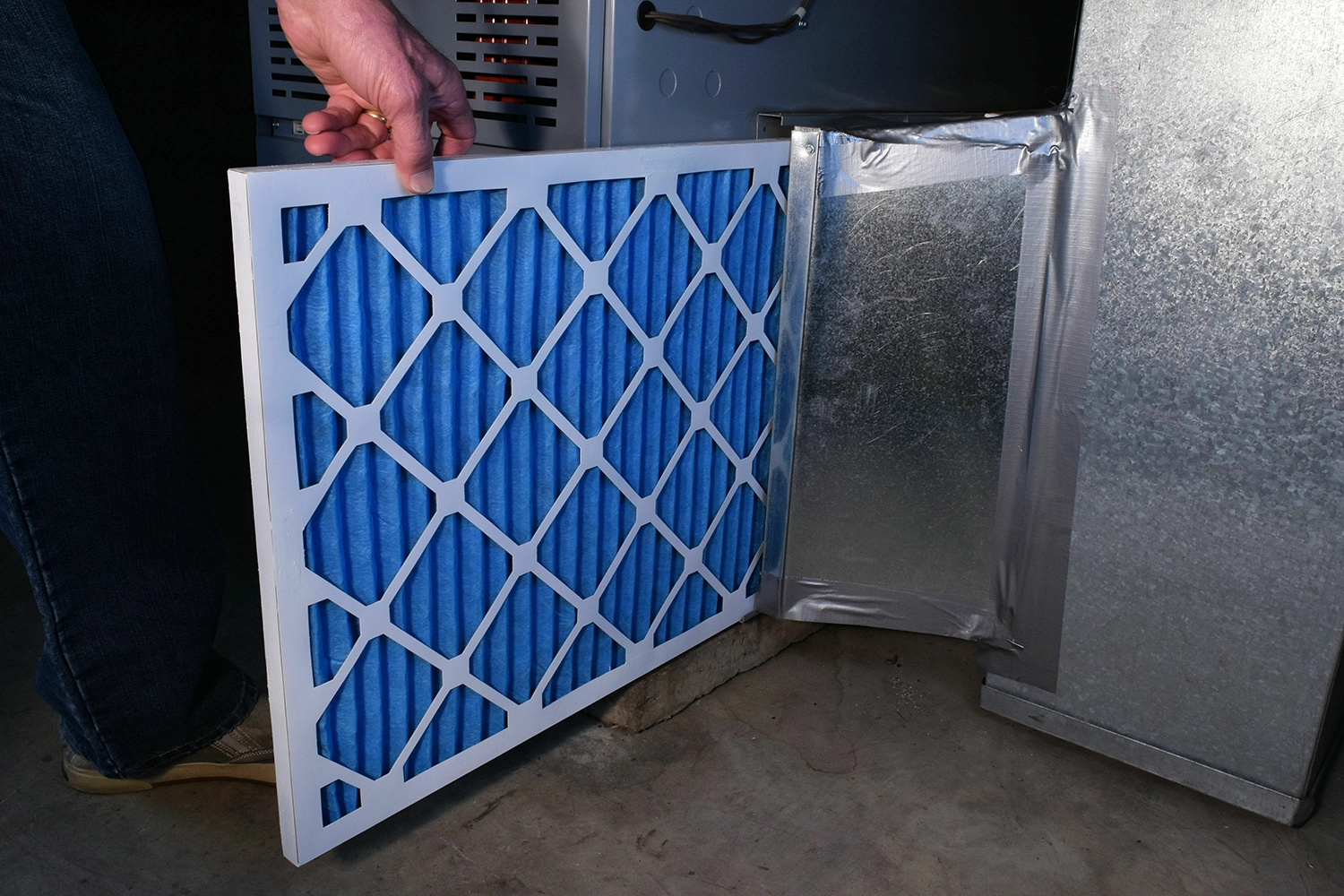
Once the heat is running most of the day, people start noticing the air itself: dust on the registers, a stale smell, a filter that came out gray after a smoky summer. That is when homeowners in Vancouver, WA and across Clark County start asking about whole-home air filtration. It is a fair question, and the honest answer starts with your ductwork, not with a product.
What whole-home air filtration actually is
If you have a furnace or a ducted heat pump, you already own a whole-home air filter. Every time the blower runs, the air in the house passes through the filter at the return. Whole-home filtration simply means making that one filter do a better job, instead of putting a separate machine in every room.
The common options are:
- A better one-inch filter. The simplest step. It only works if the system can still move enough air through it.
- A media cabinet. A deeper filter, usually four or five inches, installed at the furnace or air handler. More filter surface means it can catch finer particles with less resistance.
- An electronic air cleaner. It charges particles so they stick to collector plates. It works when the plates are cleaned on schedule and stops working when they are not.
- Portable room air cleaners. Not whole-home, but useful for a bedroom or for a house with no ducts.
Why the highest rating is not automatically the best
Filters are rated by MERV. A higher number catches smaller particles. The U.S. Environmental Protection Agency suggests a filter rated MERV 13, or as high as the system fan and filter slot can accommodate. The second half of that sentence is the part that gets skipped.
A tighter filter is harder to pull air through. If the return duct is undersized or the filter slot is only one inch deep, a high-rated filter can starve the blower. Then the furnace overheats and shuts off on its safety switch, a heat pump runs longer and heats less, and rooms at the end of the duct run get colder. We covered how airflow is measured in what CFM means for your heating and cooling, and what a starved furnace does in our post on short cycling.
What we check before recommending anything
We diagnose the house, not just the box. For filtration that means four checks:
- The filter slot. Its size and depth, and whether a deeper cabinet would physically fit.
- Bypass. Gaps around the rack or a missing cover let air go around the filter. A high-rated filter with air leaking past it does very little.
- Static pressure. A measurement of how hard the blower is working against the ducts and the filter. It shows whether there is room for a tighter filter.
- The return side. Leaks in a crawlspace or attic return pull in dusty air after the filter, so the filter never sees it.
Sometimes the right answer is a media cabinet. Sometimes it is sealing a return leak and keeping the filter you have. Sometimes it is more return air first, then a better filter.
What you can do this week
- Check the filter now, especially after wildfire smoke. A loaded filter is the first thing to rule out. See how often to replace a furnace filter.
- Make sure the filter fits snugly and the arrow points toward the blower.
- Do not jump two or three MERV steps at once. If the house gets noisier at the returns or some rooms get weaker airflow, go back a step.
- For one problem room, a portable air cleaner sized for that room is a reasonable choice.
A filter helps with particles such as dust, pollen and smoke. It does not fix moisture, and it is not a medical treatment. A damp, musty smell is a separate problem with a separate cause.
When to call
If you want better filtration and are not sure what your system can take, we can measure it and give you a written recommendation. See our indoor air quality services in Vancouver, WA, or call Sub Zero Temp Control at (360) 839-7670.
