What a Thermostatic Expansion Valve Does
The TXV meters refrigerant into the indoor coil. Homeowners do not adjust it. Wrong readings show up as poor cooling or a frozen coil, and the fix is a diagnosis, not a twist of the valve.
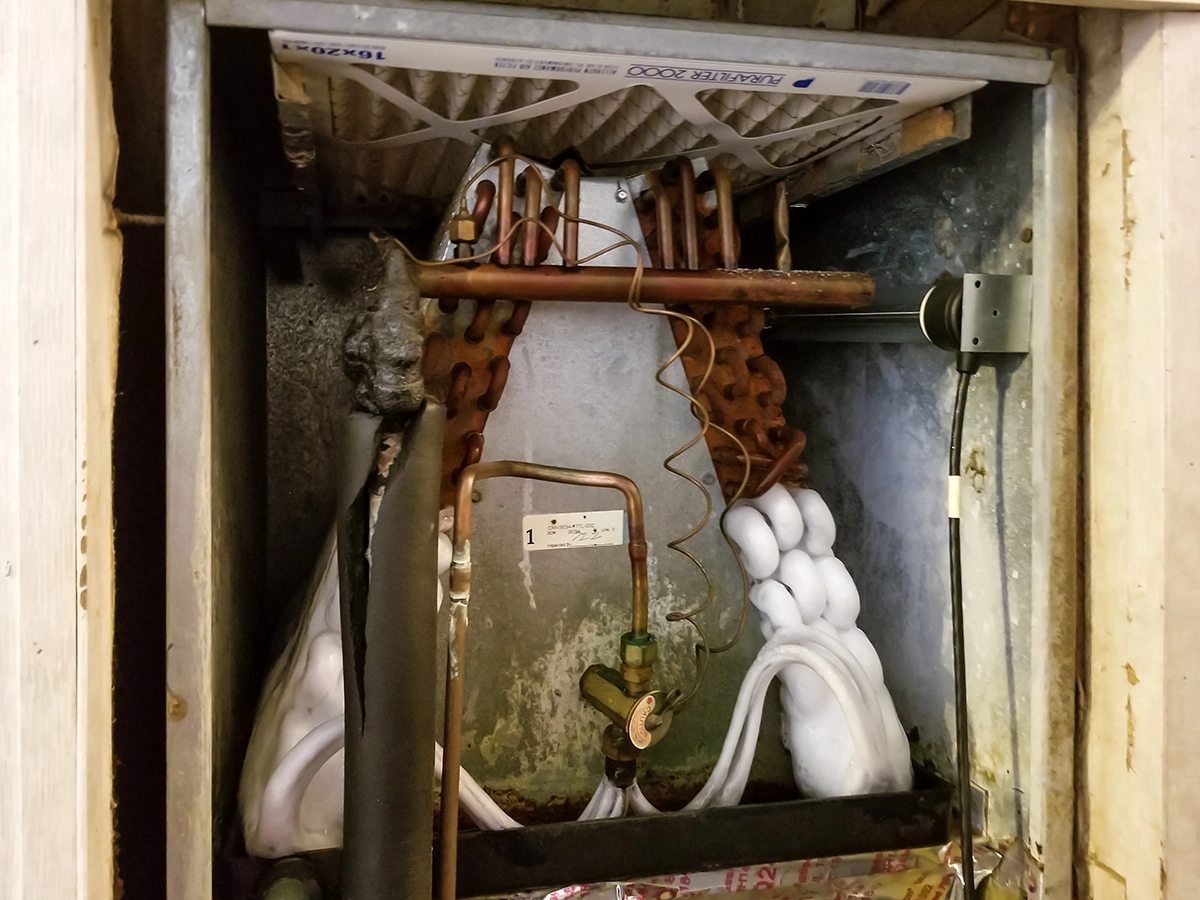
The thermostatic expansion valve sits at the indoor coil. High-pressure liquid refrigerant arrives from the outdoor unit. The valve lets a controlled amount into the coil, where it boils and absorbs heat from the house air. Too little refrigerant through the valve and the coil starves. Too much and liquid can travel back toward the compressor. The valve's job is that balance.
What homeowners notice
You do not see the valve in normal use. What you see is the result: cooling that is weak, a coil or suction line that ices, or a system that used to keep up on hot afternoons and no longer does. Those same symptoms come from a dirty filter, a low charge, a failing blower, or a condenser caked with cottonwood. The valve is one suspect, not the default.
Some indoor coils use a fixed piston instead of a TXV. They are not interchangeable by preference. The equipment was built with one or the other.
Why it is not a user adjustment
The sensing bulb has to sit on the suction line in the right place and be insulated. The valve stem, on valves that even have an external adjuster, changes superheat. Superheat is a temperature a technician measures with gauges and thermometers, not a knob for comfort. Opening the valve because the house is warm can send liquid refrigerant back to the compressor.
A stuck valve can be failed, or it can be reacting to a charge that is already wrong, a restriction in the filter drier, or airflow that is too low. Replacing the valve first, without those readings, is how a repair gets done twice.
What a proper look includes
- Airflow: filter, coil face, blower, and returns. Low airflow mimics a metering problem.
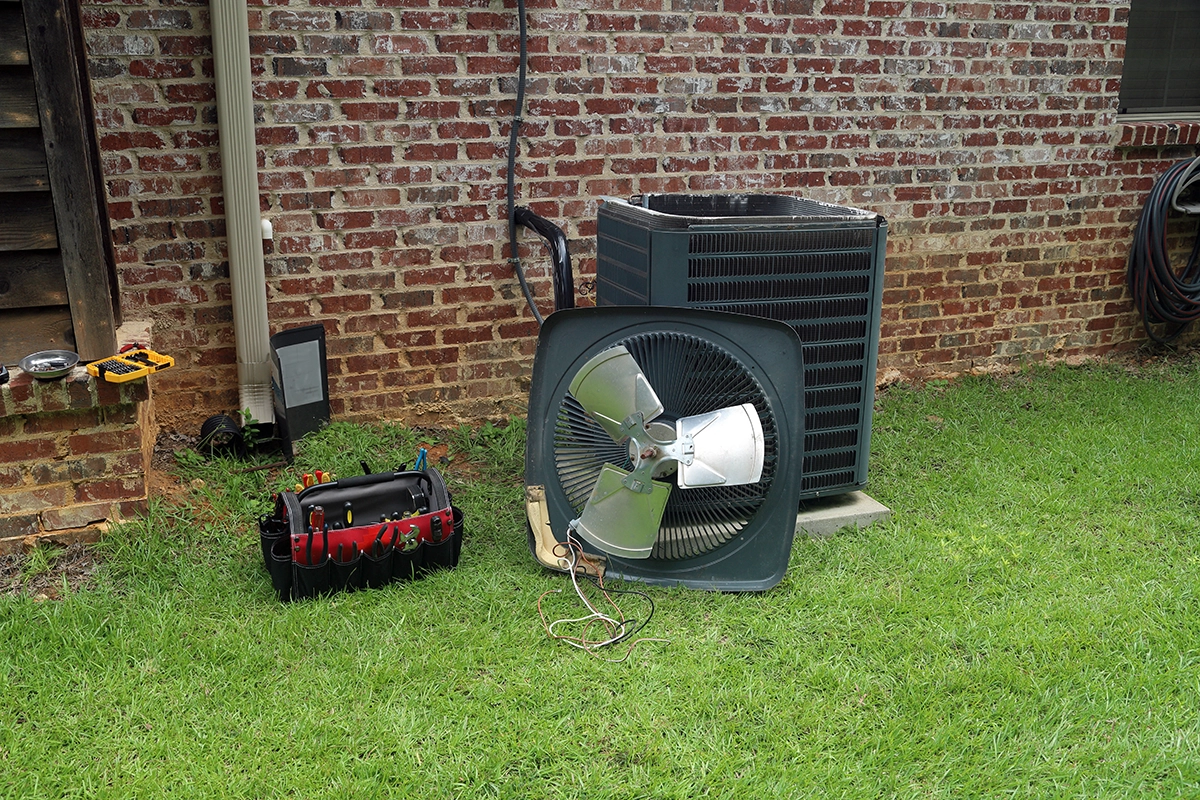
- The outdoor coil and whether the condenser fan is actually moving air.
- Pressures and line temperatures, taken by someone certified to handle the refrigerant in that system.
If cooling is off, book a cooling diagnosis. The valve gets blamed only after the house airflow and the charge are known.
Common questions
Can I adjust the TXV to get more cooling?
No. The adjustment changes how much refrigerant enters the coil. Set wrong, it can damage the compressor. It is not a comfort knob.
Does a frozen coil mean the TXV is bad?
Sometimes a valve is stuck. A dirty filter or low airflow freezes coils too. The freeze is the symptom, not the verdict.
Is a TXV the same as a piston?
No. Both meter refrigerant, but a piston is a fixed orifice. The system was built with one design.