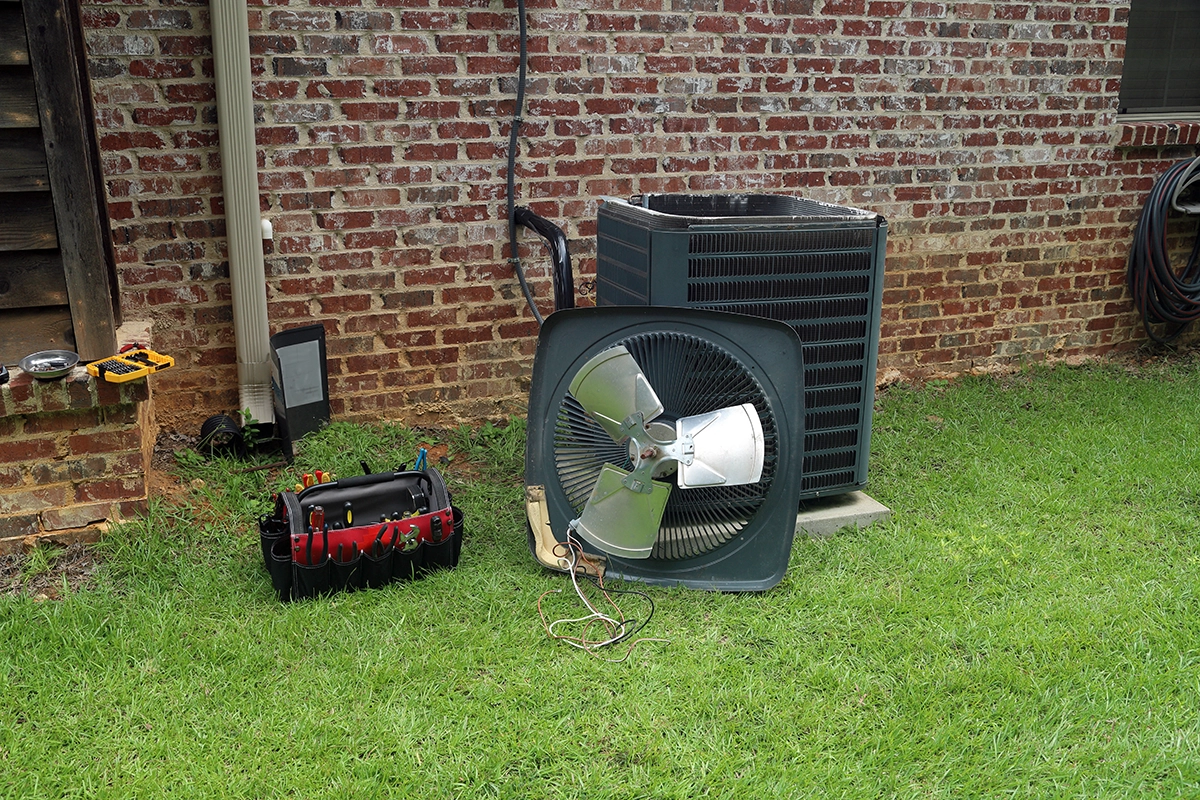
Low on Refrigerant? A Recharge Is Not the Repair
If an air conditioner is low on refrigerant, it leaked. Adding refrigerant without finding the leak does not last. Airflow problems mimic the same symptoms.
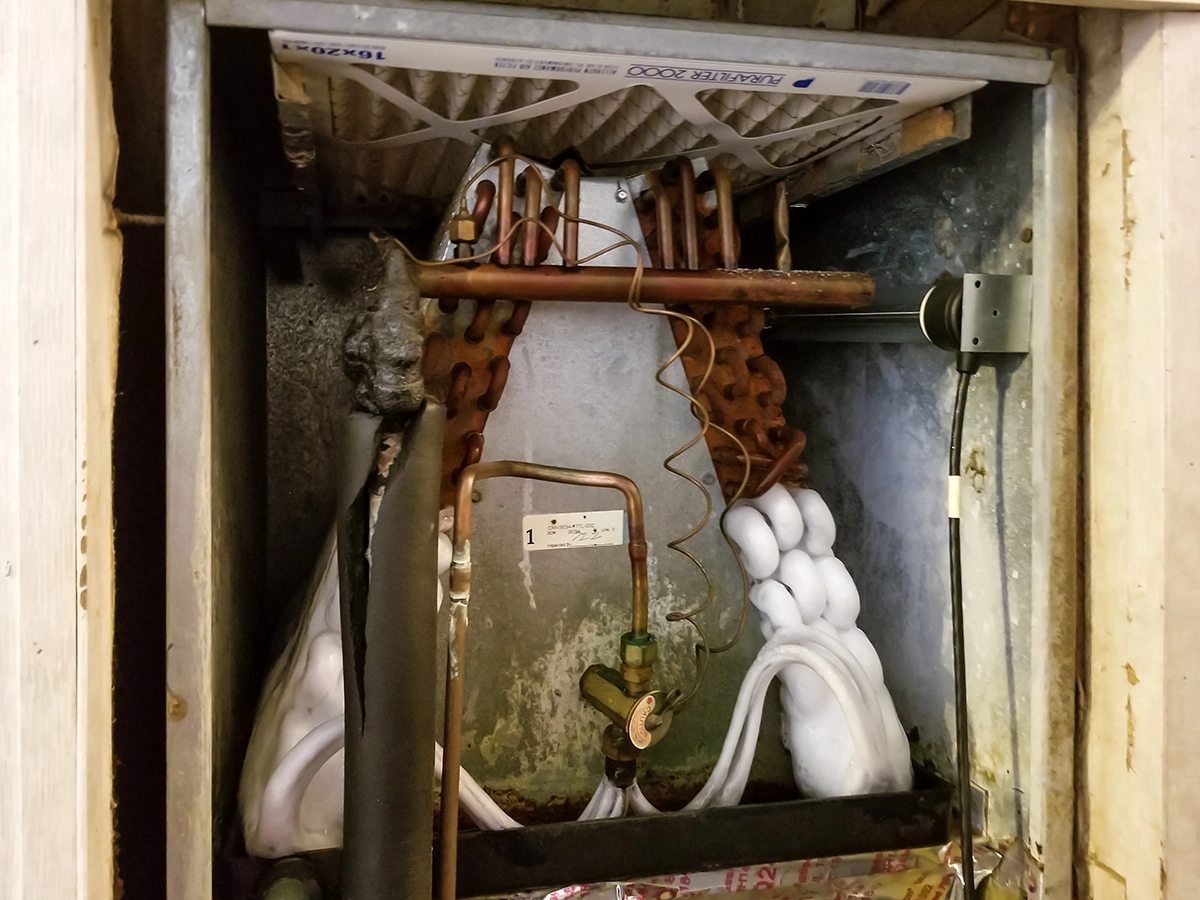
The old phrase is that the system needs a recharge. What that usually means is someone wants to add refrigerant and leave. A sealed system that still has its factory charge does not need a top-off. If the charge is low, the refrigerant went somewhere. Until that hole is found and repaired, the new charge follows the old one out.
Signs that overlap with other faults
- Long run times and air that is not very cold.
- Ice on the large insulated line, or a frozen indoor coil, then water when it melts.
- Oil stains at a fitting. Refrigerant carries oil out of a leak.
- A hiss at the indoor coil. Confirming that means opening a cabinet. Leave it to a technician.
A filthy filter, a buried outdoor coil, or a covered return will ice a coil on a system that has a perfect charge. Adding refrigerant then overcharges it, and the next failure is worse. The airflow gets ruled out first.
What a real repair looks like
A technician certified for that refrigerant measures the system, finds the leak, repairs it, replaces a filter drier when the repair requires it, and weighs the charge to the nameplate. Leak sealer products poured into the system are a gamble that clogs valves and does not replace a cracked joint. R-410A and newer refrigerants such as R-454B are not DIY cans, and they are not interchangeable.
If cooling has dropped off, check the filter and the outdoor coil, then schedule AC repair. We do not sell a recharge as the repair. If the system is old and the coil is where it leaks, replacement is a separate decision after you know that, not before.
Common questions
How often should an AC be recharged?
Never, as maintenance. The charge lasts the life of a tight system. Needing refrigerant means there is a leak.
Can I add a can of refrigerant myself?
No. It is easy to overcharge a system, the refrigerant may not even match, and the leak is still there.
Will stop-leak products work?
They are not a reliable repair, and they can clog the metering device and the recovery equipment. The leak needs to be found.